Period · c. 1820–1900
Romantic
The music begins to speak of the one who writes it.
What it was
From about 1820 to 1900, music begins to speak of personal emotion, nature and stories. Melodies are long, harmony more colourful and the variation in loudness and tempo much greater. Character pieces for piano, songs, symphonic poems and music tied to each country's identity appear. Chopin, Schumann, Brahms and Tchaikovsky belong to it.
Ideas of the period
- Long melodies
- Chromatic harmony
- Character pieces
- Virtuosity
- National music
Curiosities
- Piano The piano gained an iron frame and tighter strings, the sound grew, and it became the living-room furniture of thousands of families.
- 1844 Berlioz publishes his orchestration treatise, which follows the growth of the orchestra with trombones, tuba, harp and more percussion.
- Virtuosos Paganini on the violin and Liszt on the piano turned virtuosity into a spectacle and travelled like stars.
- Nations Dvořák, Grieg, Smetana and Mussorgsky used melodies and dances of their own people to affirm their country's music.
Composers of the period
Born between 1790 and 1859 (the app's cut, by birth year). The composer profiles are in Portuguese.
 Lowell Mason1792–1872
 Gioachino Rossini1792–1868
 Franz Schubert1797–1828
 Adolphe Adam1803–1856
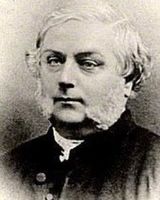 Henry Gauntlett1805–1876
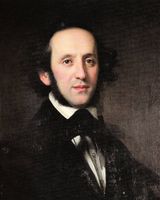 Felix Mendelssohn Bartholdy1809–1847
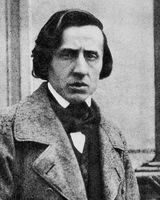 Frédéric Chopin1810–1849
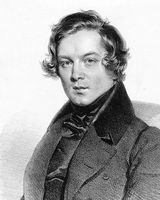 Robert Schumann1810–1856
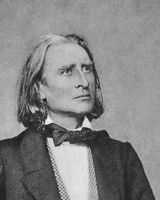 Franz Liszt1811–1886
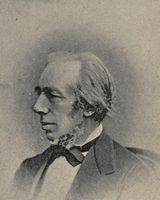 George Alexander Macfarren1813–1887
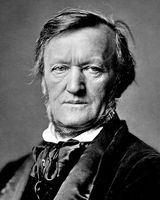 Richard Wagner1813–1883
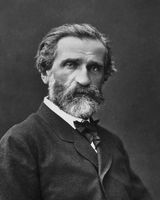 Giuseppe Verdi1813–1901
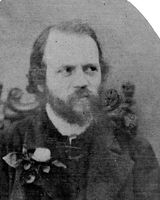 Charles-Valentin Alkan1813–1888
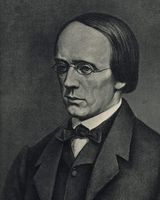 Halfdan Kjerulf1815–1868
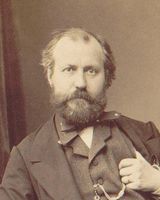 Charles Gounod1818–1893
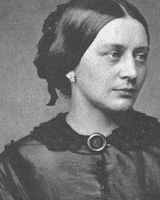 Clara Schumann1819–1896
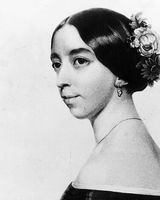 Pauline Viardot-García1821–1910
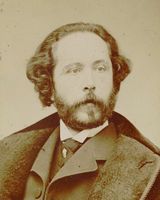 Édouard Lalo1823–1892
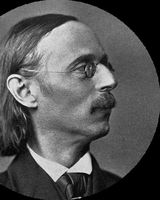 Peter Cornelius1824–1874
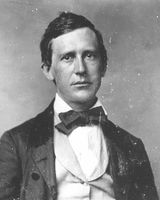 Stephen Foster1826–1864
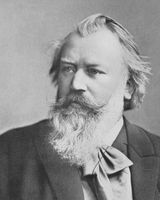 Johannes Brahms1833–1897
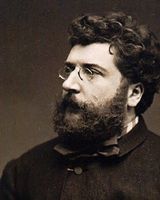 Georges Bizet1838–1875
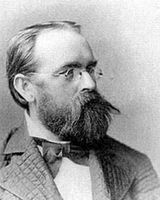 Josef Rheinberger1839–1901
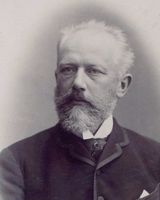 Piotr Ilitch Tchaikovsky1840–1893
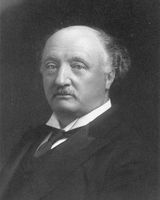 John Stainer1840–1901
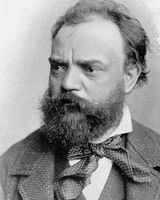 Antonín Dvořák1841–1904
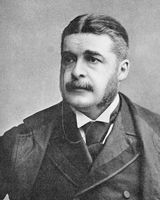 Arthur Sullivan1842–1900
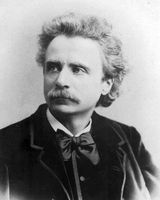 Edvard Grieg1843–1907
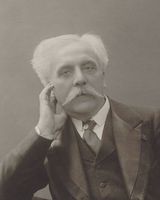 Gabriel Fauré1845–1924
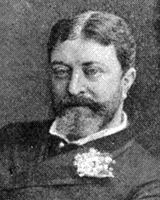 Francesco Paolo Tosti1846–1916
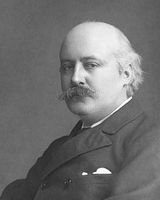 C. Hubert H. Parry1848–1918
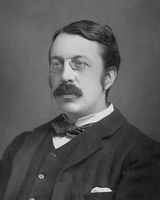 Charles Villiers Stanford1852–1924